
PROPELLER ENGINEERING
Skew Angle and Noise: How Many dB Do You Gain per Blade Count?
Curving the blade tip against the direction of rotation, known as skew, spreads the pulses a propeller sends into the hull. Noise reduction for 3, 4 and 5-bladed propellers at 12°, 18° and 30° skew.
- PUBLISHED
- READING
- 4 min
- AUTHOR
- Eriş Pervane Mühendislik
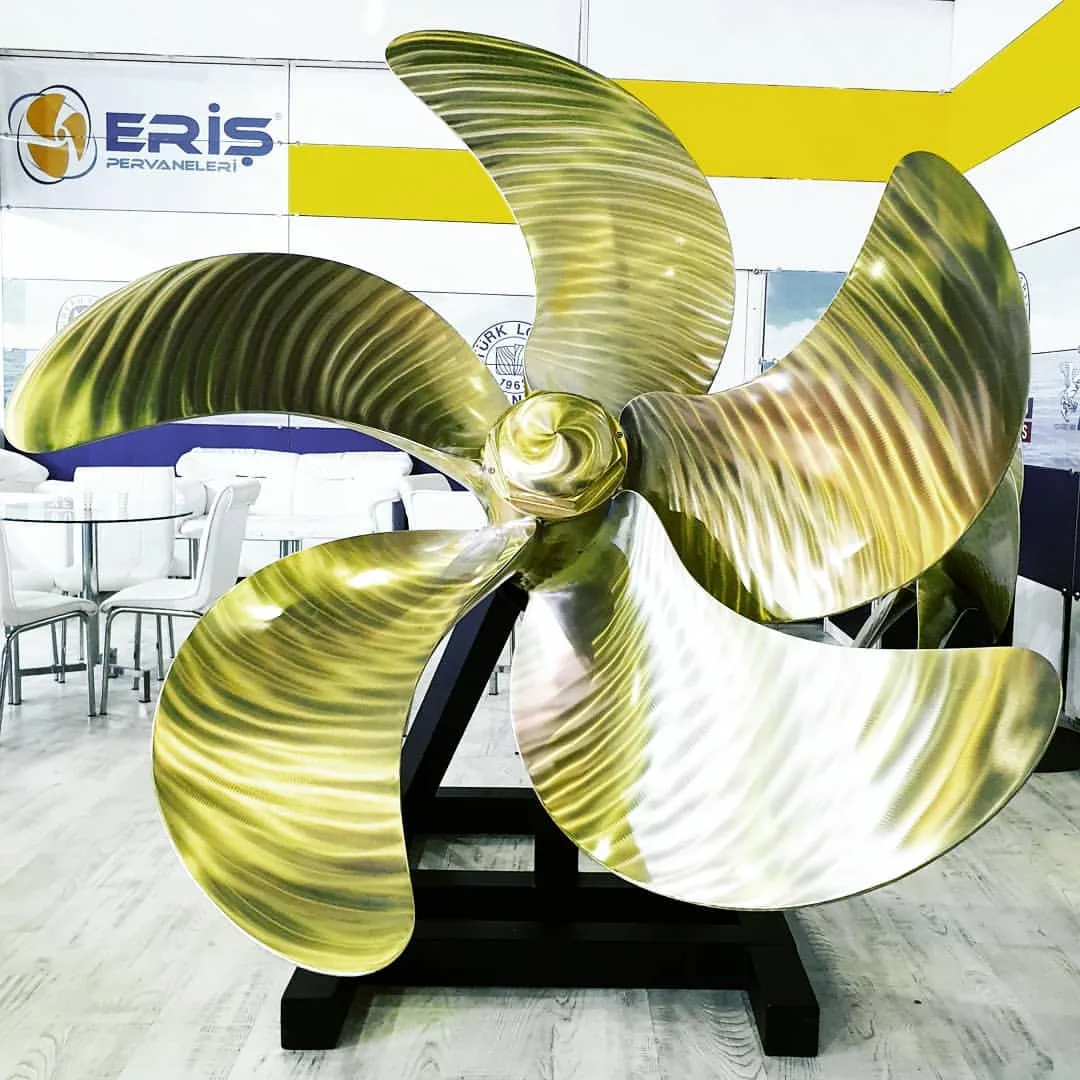
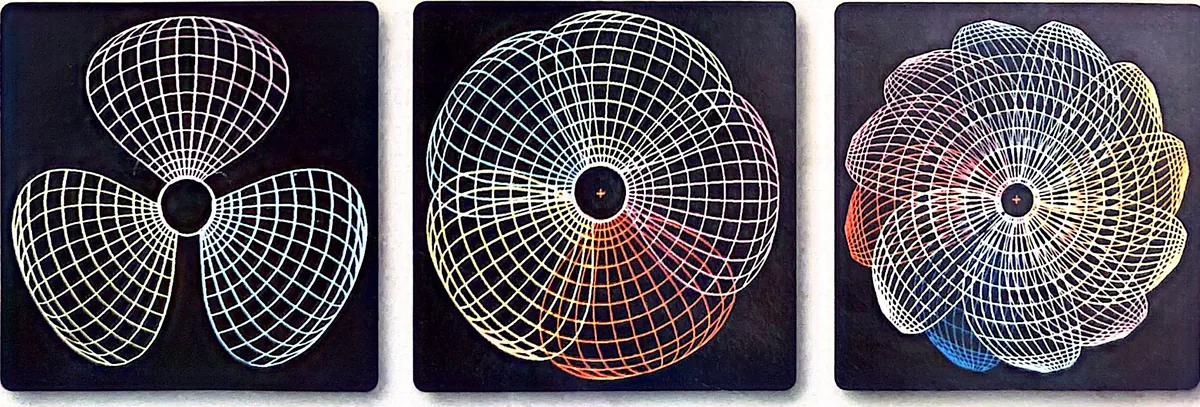
In our wake article we saw that a propeller almost never works in uniform water. The blade meets slow water at the top of the disc and faster water below, so its load changes on every pass. That load change becomes vibration that travels through the shaft, stern tube and bearings into the boat. Skew is one of the most effective ways to soften it.
What is skew?
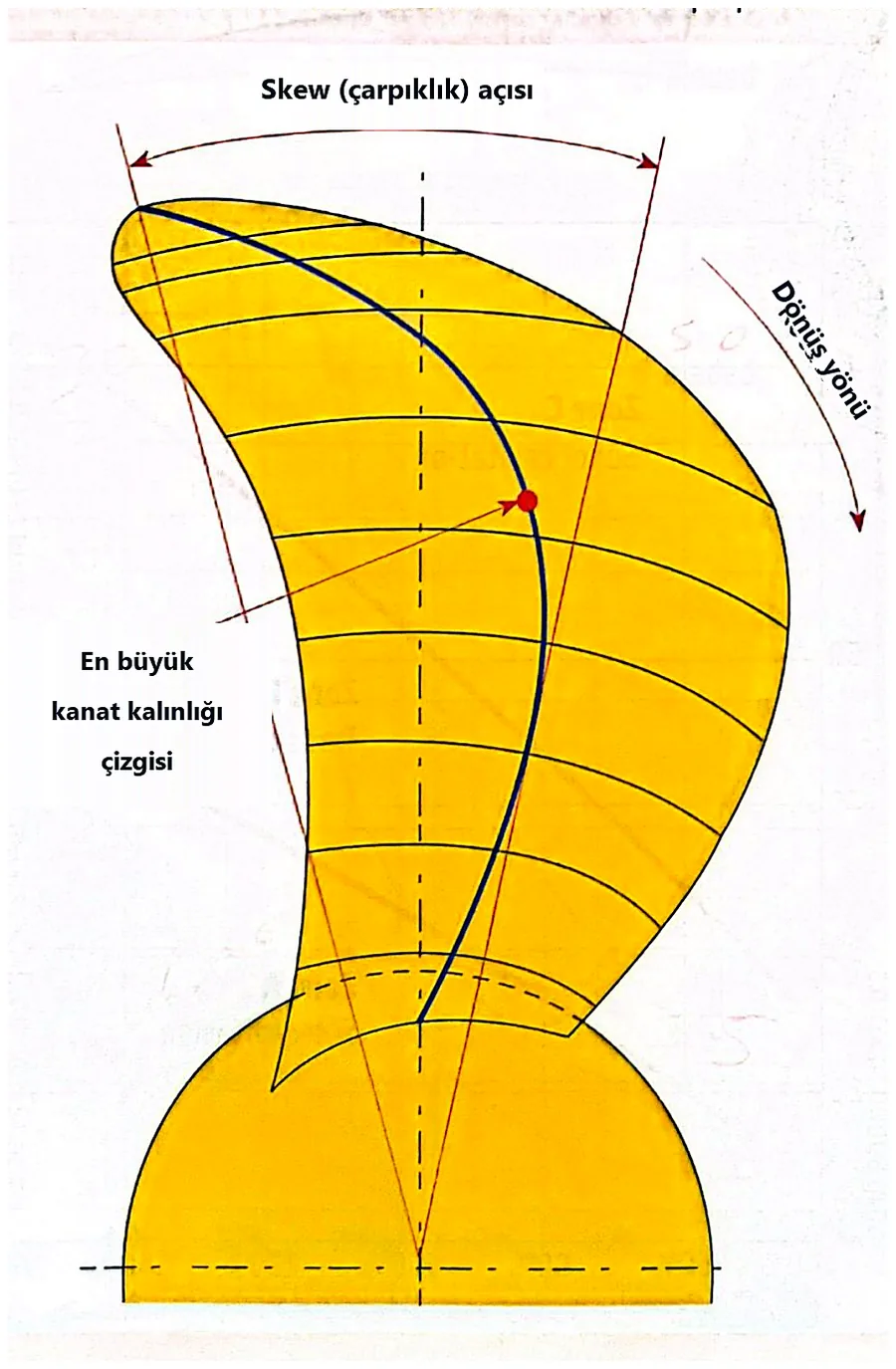
Seen from ahead, the centre line of a straight blade runs radially from hub to tip. On a skewed blade this line, which joins the thickest points of the sections, curves back against the direction of rotation. The angle between the two lines drawn from the hub centre to the blade root and to the tip is the skew angle.
Thanks to this curve the blade does not enter the high-wake zone all at once: first the root, then the middle, finally the tip. The load change is spread over a longer time and the peak load differences fall.
Noise reduction by skew angle and blade count
| Number of blades | Skew 12° | Skew 18° | Skew 30° |
|---|---|---|---|
| 3 blades | −3.0 dB | −3.9 dB | −4.3 dB |
| 4 blades | −4.7 dB | −6.2 dB | −6.9 dB |
| 5 blades | −6.9 dB | −9.0 dB | −10.1 dB |
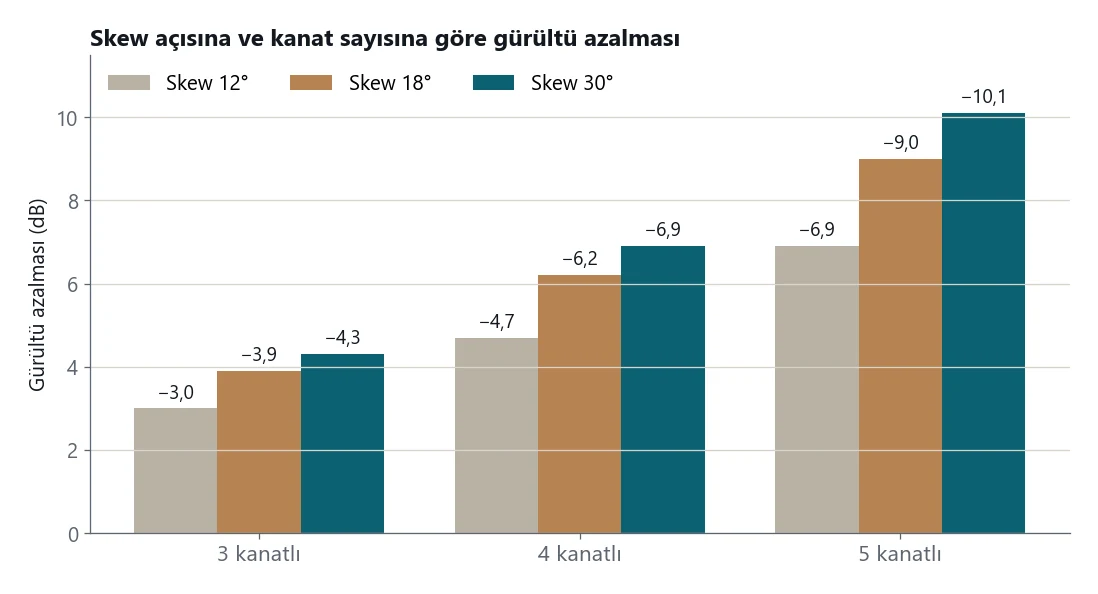
Remember that the decibel is logarithmic: −3 dB is roughly half the sound energy, and −10 dB is about half the perceived loudness. Moving to a 5-bladed propeller with 30° skew can turn a cabin hum into a background sound you hardly notice.
Three practical conclusions
- Choose the largest skew you can. From 12° to 30° gives a 5-bladed propeller more than 3 dB extra.
- Blade count matters as much as skew. A 5-bladed propeller with only 12° skew matches a 4-bladed one with 30°.
- On a 3-bladed propeller skew helps little: 12° to 30° gains only 1.3 dB. If quietness is the priority, add blades.
The limits of skew
Skew is not free. Stresses rise in a curved blade tip, especially when running astern, so the thickness and material of highly skewed blades must be calculated carefully. Pattern, casting and machining accuracy must also be higher than for a straight blade, because pitch and section errors quickly cancel the gain.
Even so, on a well designed and accurately cast propeller 30° skew is one of the most effective measures against vibration and noise, and combined with rake it also increases the clearance to the hull.
For a quiet boat think about clearance first, then blade count, then skew; they work best together.
If your boat hums or vibrates, check the existing propeller's blade count and skew together with its clearances, and see our propeller page for skewed propeller options.