
PROPELLER ENGINEERING
Balancing Diameter and Pitch in Propeller Selection
Why does propeller selection lose efficiency when hull form, engine power and gear ratio are not evaluated together? We examine the core design parameters.
- PUBLISHED
- READING
- 1 min
- AUTHOR
- Eriş Pervane Mühendislik
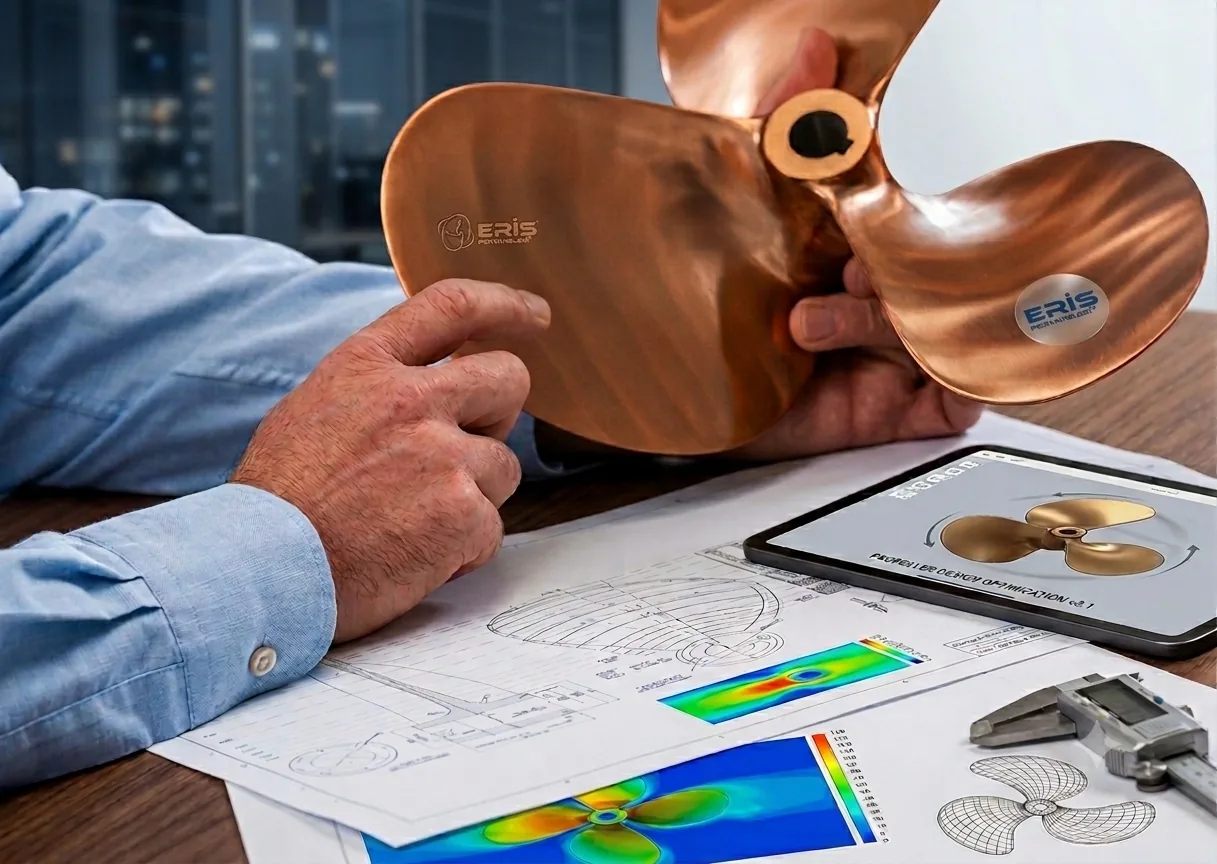
The performance of a marine propeller cannot be assessed from diameter or blade count alone. Diameter, pitch, blade area, rotational speed and hull resistance must be balanced at the same operating point.
Where the calculation begins
A sound preliminary design evaluates vessel length, beam, draft and displacement together with engine power, maximum RPM and reduction ratio. These inputs define the required thrust and the usable diameter envelope.
- An undersized diameter may create excessive blade loading.
- Too much pitch may prevent the engine from reaching its target RPM.
- Too little pitch may cause overspeed and efficiency loss.
- Insufficient blade area may increase cavitation risk.
The best result comes from balancing the complete propulsion system, not from maximizing a single dimension.
Measurements and sea-trial data
When replacing an existing propeller, full-load engine RPM, vessel speed, loading condition and vibration observations should be recorded during the sea trial. This field data validates the calculation and provides a dependable reference for the new design.
For a preliminary review, send your vessel and engine information to our engineering team through the contact page.