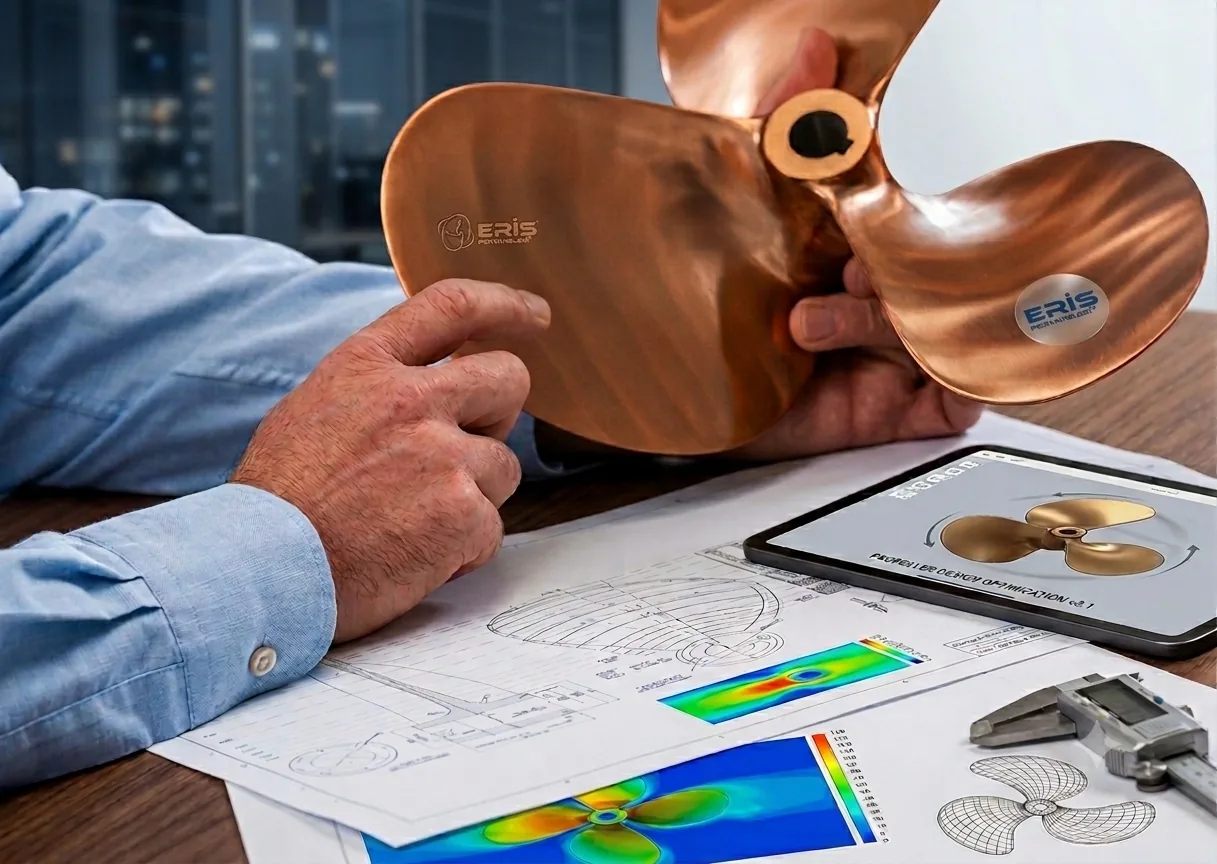
By analyzing technical parameters such as vessel length, beam, draft, engine power, gearbox ratio, and maximum RPM, the most efficient propeller diameter and pitch are calculated using our engineering software. Incorrect calculation leads to engine overload or underperformance.
Yes. Damaged propellers with bent blades, cavitation wear, and cracks can be successfully repaired using hydraulic pressing, welding overlay matching the original Cu3 bronze alloy, grinding/polishing, and computerized dynamic balancing.
Yes. Upon request during the ordering phase, we manufacture under the supervision of surveyors from all reputable classification societies, including Türk Loydu, Bureau Veritas (BV), RINA, DNV, and Lloyd's Register (LR), performing the necessary material analysis and strength tests to issue the class certificate.
We use high-grade Cu3 (Manganese Bronze and Nickel Aluminium Bronze - Mn-Al-Bz) alloys, which offer outstanding seawater corrosion resistance, erosion wear resistance, and an excellent strength-to-weight ratio. All castings are done in-house under spectral analysis control.
Cavitation is caused by an extreme pressure drop on the back side of the propeller blade due to high speed. This drop creates water vapor bubbles that collapse violently when moving to higher pressure zones, microscopically eroding the metal surface. It can be prevented by selecting the correct Disk Area Ratio (DAR), optimized pitch distribution, and high-quality smooth surface finishes.
DAR is the ratio of the total projected blade area to the area of the circle swept by the propeller tip. Heavy-duty vessels like tugboats and fishing boats require a high DAR (e.g., 0.70 - 0.85) to avoid cavitation under high loads, while speedboats and sailboats utilize lower ratios to minimize drag. Finding the right balance requires precision engineering.
Depending on the propeller's diameter, blade count, and classification requirements, custom-designed and manufactured propellers are generally ready for dispatch within 2 to 4 weeks. Standard series models can be shipped much faster based on stock levels.
An unbalanced propeller generates high-frequency vibrations during rotation. These vibrations can bend the shaft, wear out stern tube seals and cutless rubber bearings, damage the gearbox, and break engine mounts, leading to expensive repairs. Checking your propeller balance at the beginning of each season is crucial.