
PROPELLER ENGINEERING
Propeller Clearances: How Much Room to the Hull, Rudder and Keel?
A few centimetres between the propeller and the hull decide how much vibration and noise the boat suffers. Minimum clearances, the effect of blade count and the 30% rule.
- PUBLISHED
- READING
- 3 min
- AUTHOR
- Eriş Pervane Mühendislik
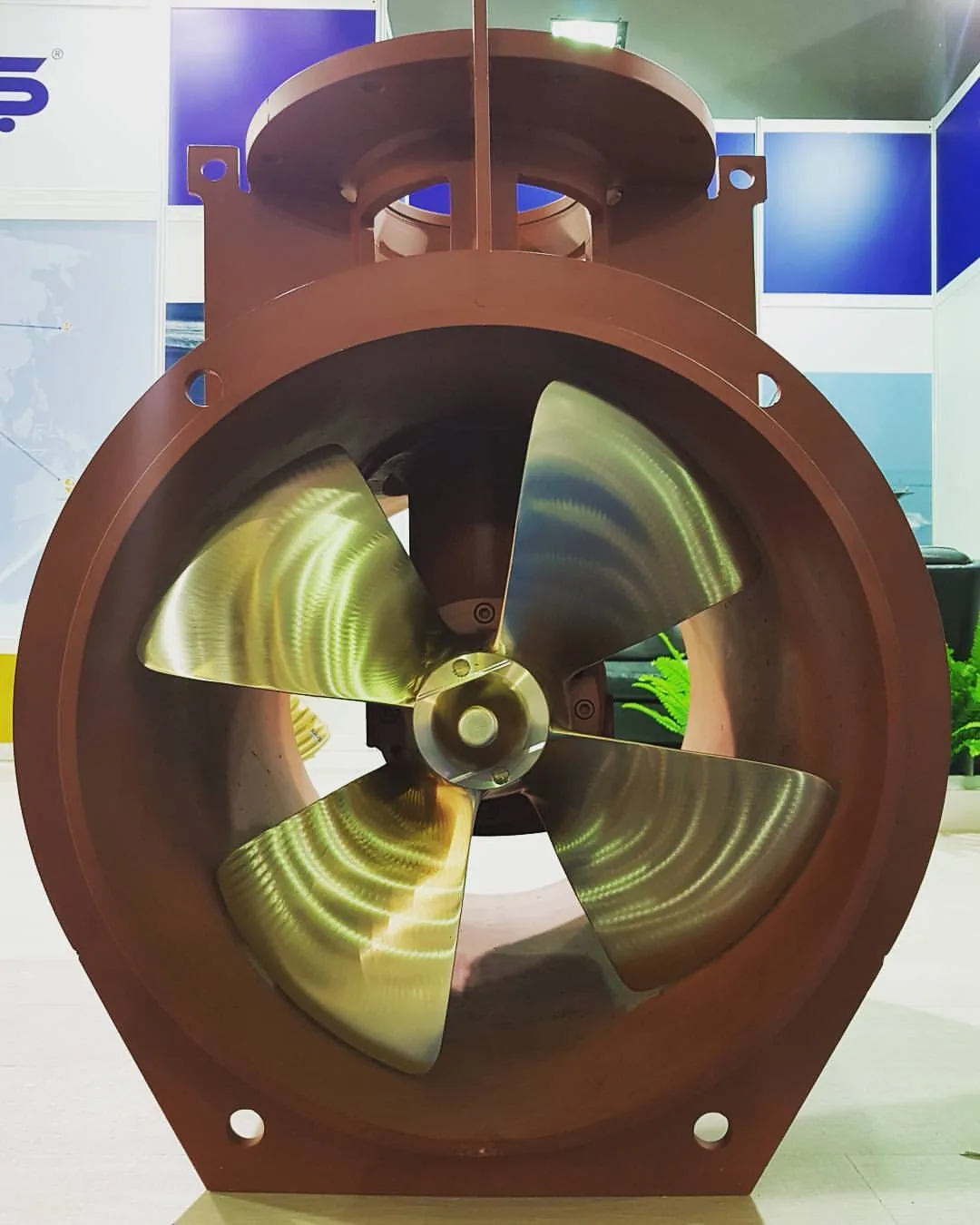
As a propeller turns, every blade sends a pressure pulse into the water each time it passes under the hull. The hull takes that pulse like a drum skin and spreads it through the boat. The smaller the gap between the blade tip and the hull, the harder the pulse. That is why propeller clearances are among the strongest factors in the vibration and noise felt on board.
Minimum clearances
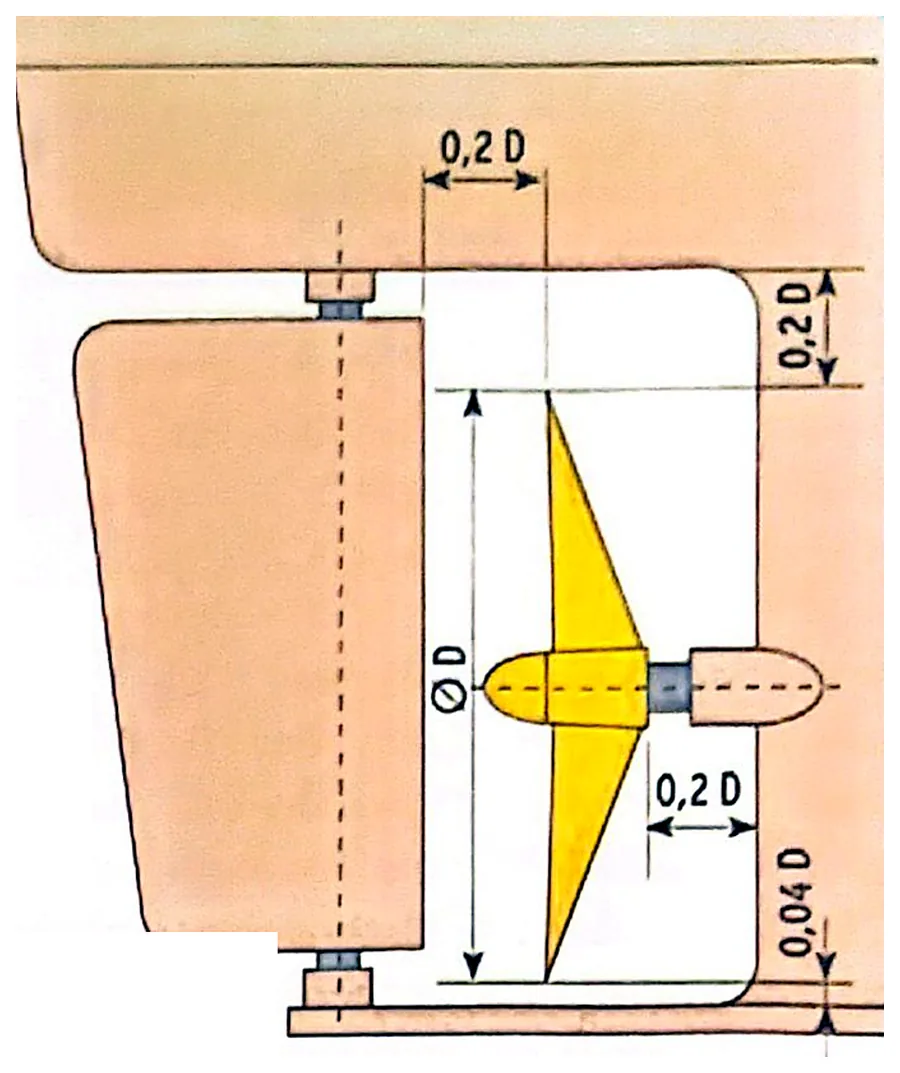
Three distances matter in the stern aperture. With D as the propeller diameter:
| Distance | Minimum |
|---|---|
| Blade tip to hull above | 0.2 × D |
| Propeller to rudder leading edge | 0.2 × D |
| Blade tip to keel shoe below | 0.04 × D |
An 800 mm propeller therefore needs at least 160 mm to the hull and rudder and 32 mm to the shoe. These are lower limits; good results need more.
How pulses grow as clearance shrinks
The relationship is not linear: pulses rise steeply as the gap closes, and blade count matters too.
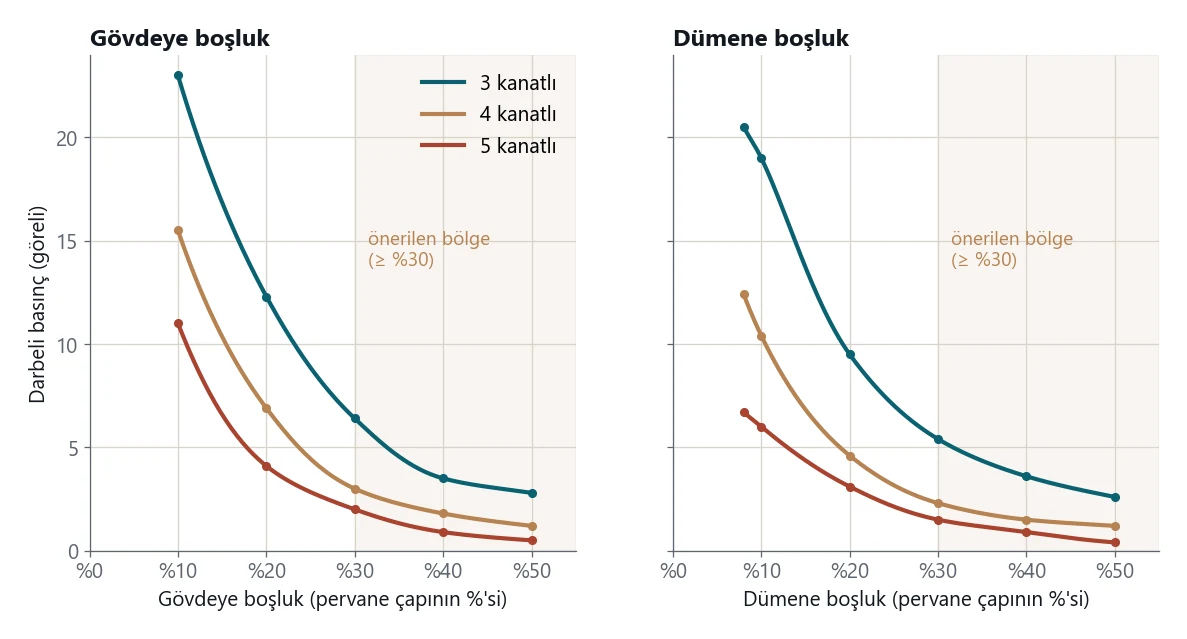
- At the same clearance a 3-bladed propeller produces much harder pulses than a 5-bladed one; at 20% hull clearance it is about three times higher.
- Going from 10% to 20% roughly halves the pulses, and 20% to 30% still gives a clear gain.
- Beyond 30% the curves flatten and extra clearance pays back less.
The practical rule: leave 30% of the propeller diameter to the hull if you can. 15% is a minimum, 20–30% gives good results.
The compromise with draught
A larger diameter means efficiency, but also less room to the hull or more draught. Three tools help:
- More blades. A 4 or 5-bladed propeller runs quieter than a 3-bladed one at the same clearance.
- Rake. Leaning the blades aft gains tip clearance without changing the diameter.
- Skew. Curving the blade tips against the direction of rotation spreads the pulse over time.
Fixing it later is always expensive
If vibration shows up after the boat is built, insulation is the usual answer. It costs more and achieves less because it does not touch the cause. A small change at the design stage removes most of the risk.
When you draw the stern aperture, think about the space around the diameter, not just the diameter.
To measure an existing boat, turn one blade to the top position and measure square from the tip to the hull, then repeat for every blade; differences between blades also reveal tip damage or shaft misalignment. Divide by the diameter to get the percentage. If you end up below 15%, diameter, blade count and rake should be reviewed together; try our propeller calculator or talk to our engineers.