
PROPELLER ENGINEERING
Propeller Singing: What Causes the Whine and the Anti-Singing Edge
Some propellers give off a sharp, high-pitched tone at a certain rpm, and of two identical propellers one may sing while the other stays silent. The cause, how to recognise it, and the anti-singing chamfer on the trailing edge.
- PUBLISHED
- READING
- 3 min
- AUTHOR
- Eriş Pervane Mühendislik
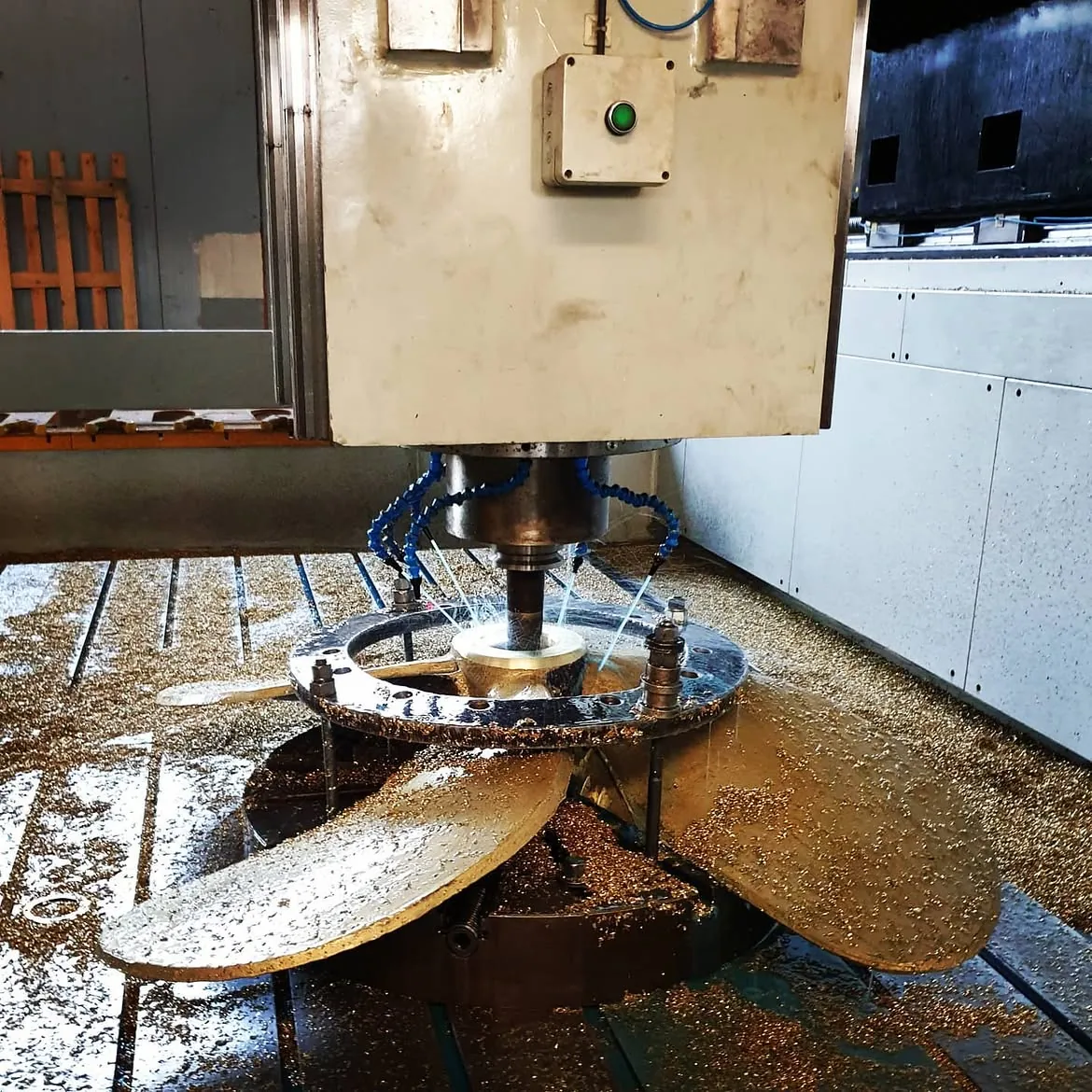
On some boats a sharp, high-pitched, almost whistling tone rises from the stern at a certain rpm and disappears when the rpm is raised or lowered a little. This is propeller singing. It is annoying and confusing, and the curious part is that of two completely identical propellers one may sing while the other does not.
What is singing?
Singing is a high-pitched noise produced when the blades enter a particular, critical kind of vibration; it is really a vibration problem. As the flow leaves the trailing edge, small vortices shed at regular intervals. When that shedding frequency approaches the blade's own natural frequency, the blade vibrates like a tuning fork and radiates sound.
It has been studied for many years and many theories exist, yet it is still not fully "solved". Small differences in casting and finishing can shift a blade's natural frequency enough to change the outcome.
Telling singing from other noises
| Noise | Character | Clue |
|---|---|---|
| Singing | Clean, high, steady tone | Appears in a narrow rpm band only |
| Cavitation | Crackling, hissing, "gravel" sound | Grows with rpm and load; erosion marks possible |
| Gears | Humming, proportional to rpm | Can be heard with the propeller disconnected |
| Unbalance | Low-frequency shaking | Once per shaft revolution, worse with rpm |
How to cure it
- Change the blade's natural frequency with thicker, thinner, wider or narrower blades, usually a new design.
- Force the flow to leave the blade at a fixed point with a special chamfer on the trailing edge, so the rhythmic vortex variation cannot form. This is the anti-singing edge.
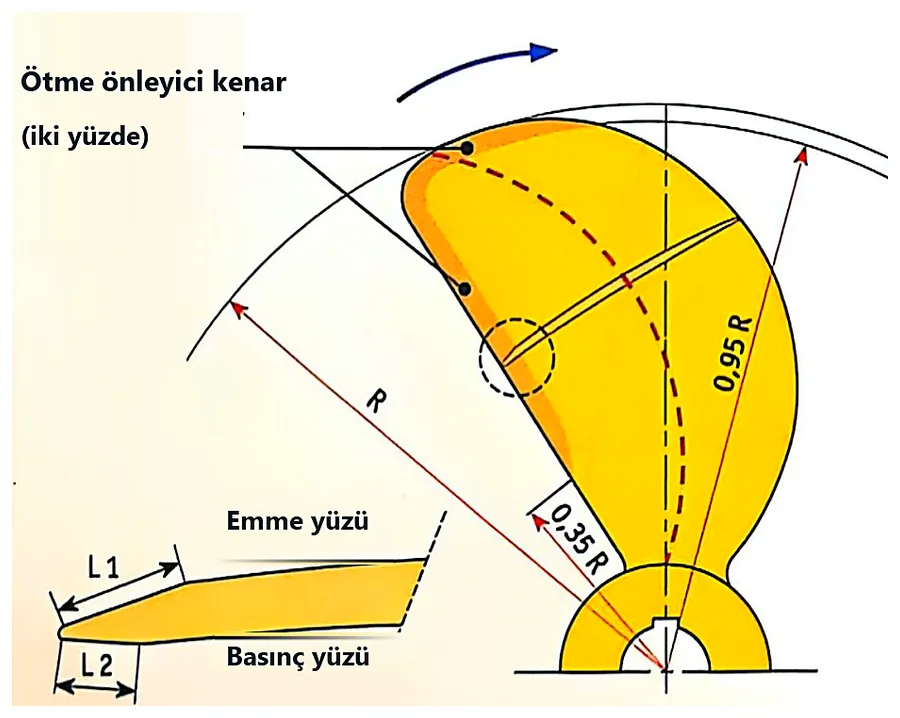
The chamfer runs along the trailing edge from about 0.35R to 0.95R and is cut on both sides (L1 suction side, L2 pressure side), with lengths set by blade thickness and section. Because it changes the trailing edge it can also affect pitch and thrust, so it must be measured and machined evenly on all blades in a specialist workshop; an uneven chamfer on one blade can cure the singing but spoil the balance.
A singing propeller is often not faulty; it simply vibrates at the wrong frequency, and the cure usually concerns only the trailing edge.
Note the rpm at which the tone appears, record it if you can, and share it when you bring the propeller to our repair workshop.