
PROPELLER ENGINEERING
The Hull Above the Propeller: Stopping Drumming at the Source
Every revolution the propeller sends pressure pulses into the hull above it. If that hull is not stiff enough it vibrates like a drum skin. Frame stiffening, 200 mm frame spacing and the effect of anti-drumming compound.
- PUBLISHED
- READING
- 3 min
- AUTHOR
- Eriş Pervane Mühendislik
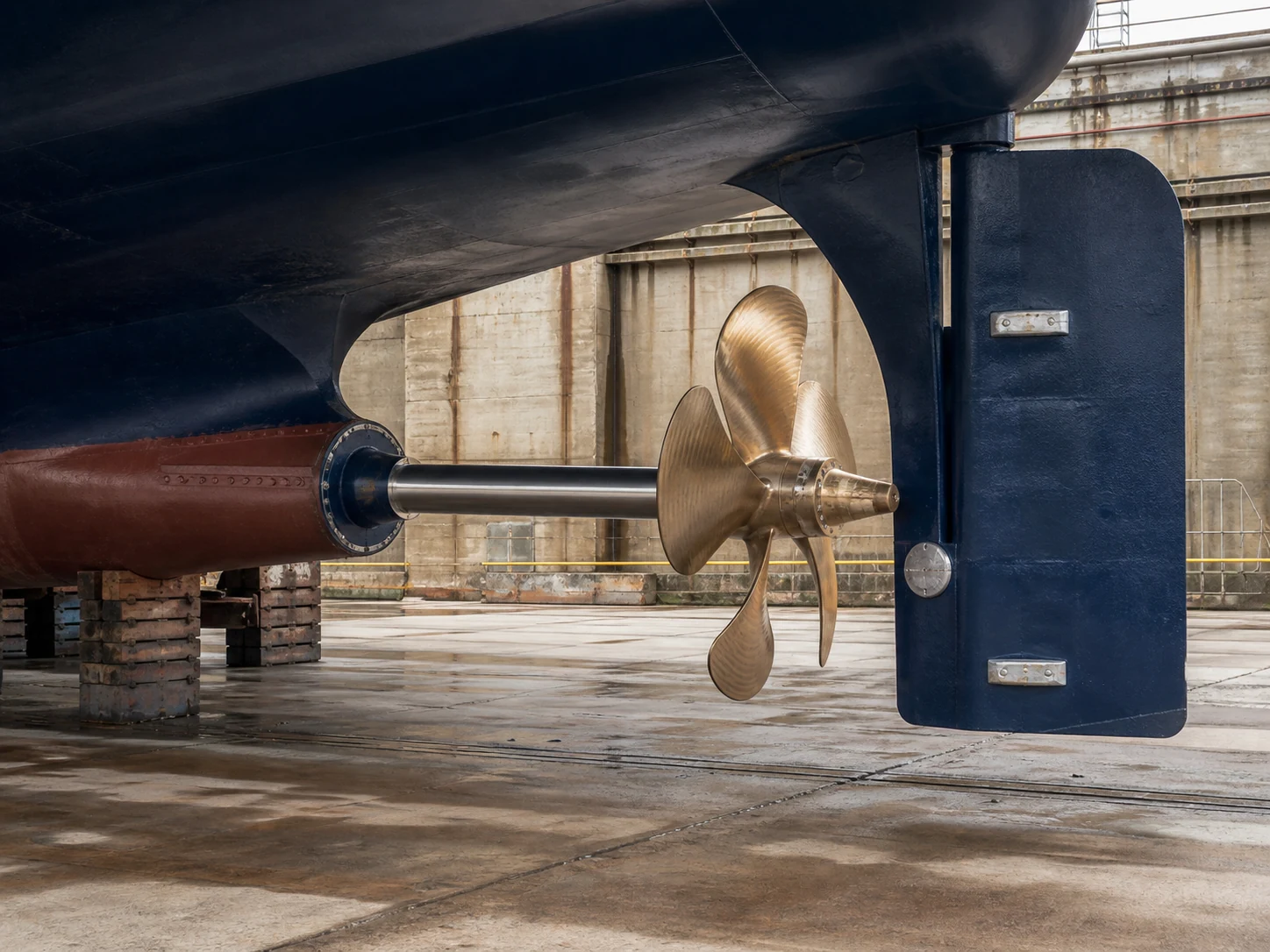
However well a propeller is designed, every blade sends a pressure pulse into the water as it passes under the hull. You cannot eliminate those pulses, but you can build the structure that carries them correctly. Most drumming comes not from the propeller itself but from how the hull above it responds.
Why the hull behaves like a drum skin
If the plating above the propeller is not stiff enough, the harmonic pressure pulses of every revolution make it vibrate like an eardrum. The vibrating plate shakes the air and the structure around it, and the sound spreads through the whole boat.
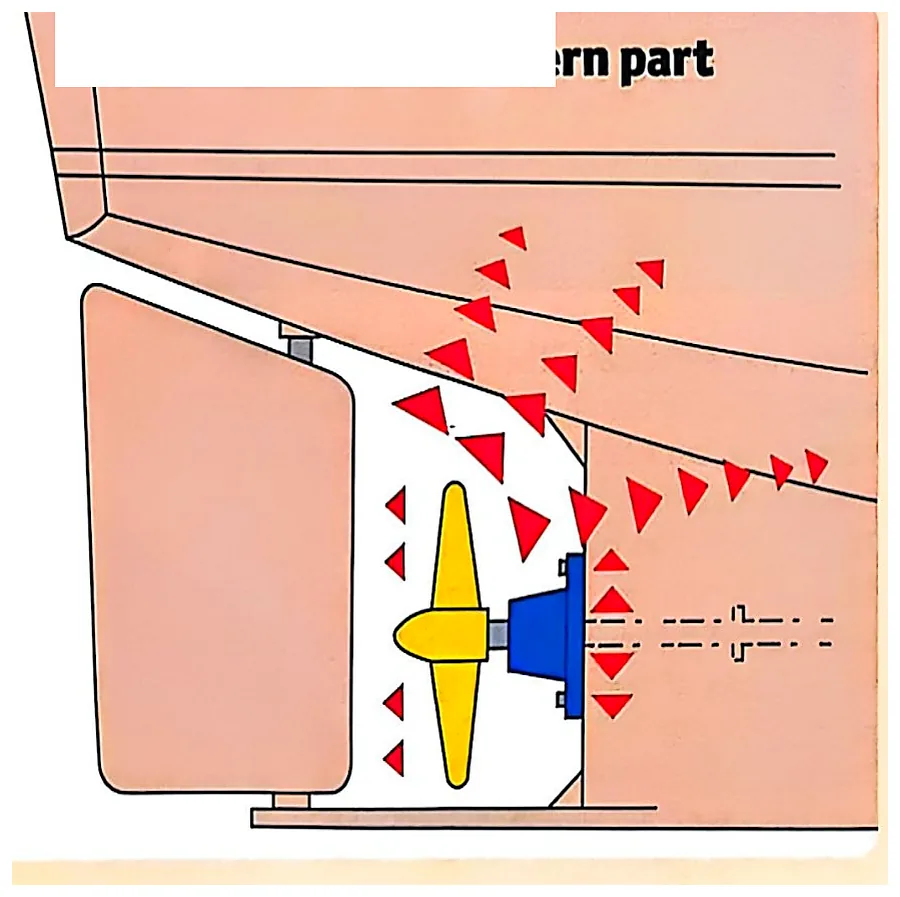
The pulse frequency is f = Z × n / 60 with Z blades and n propeller rpm. A 4-bladed propeller at 1000 rpm sends about 66.7 pulses per second. If the natural frequency of the plating above is close to this value or its multiples, resonance multiplies the vibration.
Solution 1: stiffen the hull above the propeller
Stiffen the plating above the propeller with transverse and longitudinal frames. Smaller free panels have higher natural frequencies, moving them away from the pulse frequency. In practice a frame spacing of about ±200 mm above the propeller has given good results.
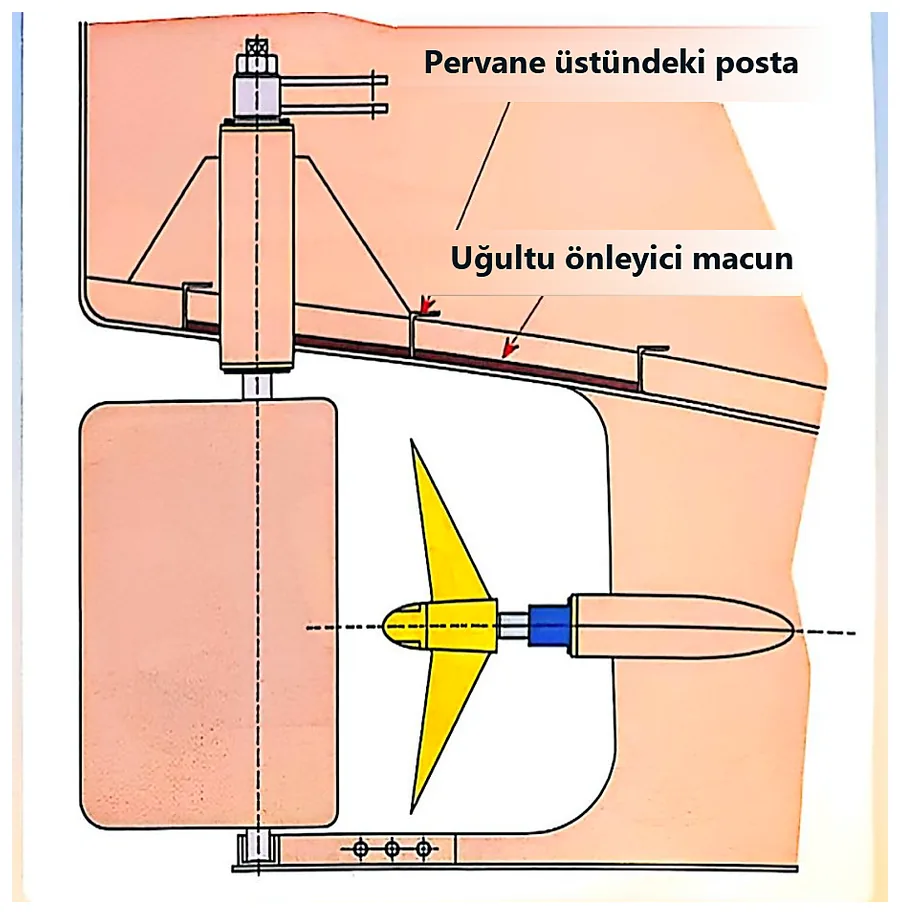
In a new build this means a few extra frames; after the boat is finished it can mean stripping the interior.
Solution 2: anti-drumming compound
Anti-drumming compound on the inside of the hull above the propeller damps the plate, whatever the cause of the noise, rotation or cavitation. Based on rotation noise and a non-cavitating propeller, an average reduction of 3.0 dB is within reach, roughly halving the sound energy. It is always worth applying, even when no cavitation is expected.
The right order
- Reduce the source: clearance, smooth wake, blade count and skew.
- Cut the path: stiffen the hull above the propeller and separate panel and pulse frequencies.
- Damp what remains: anti-drumming compound and insulation if needed.
Drumming is often not the sound of the propeller but of the plate above it.
For a review of the complete drive line see our propulsion systems page or contact us.