
PROPELLER ENGINEERING
Blade Area Ratio: How Much Blade Surface Does a Propeller Need?
A larger blade area reduces cavitation risk but adds friction and lowers efficiency. Choosing the blade area ratio, blade contour, section types and cavitation zones by speed.
- PUBLISHED
- READING
- 3 min
- AUTHOR
- Eriş Pervane Mühendislik
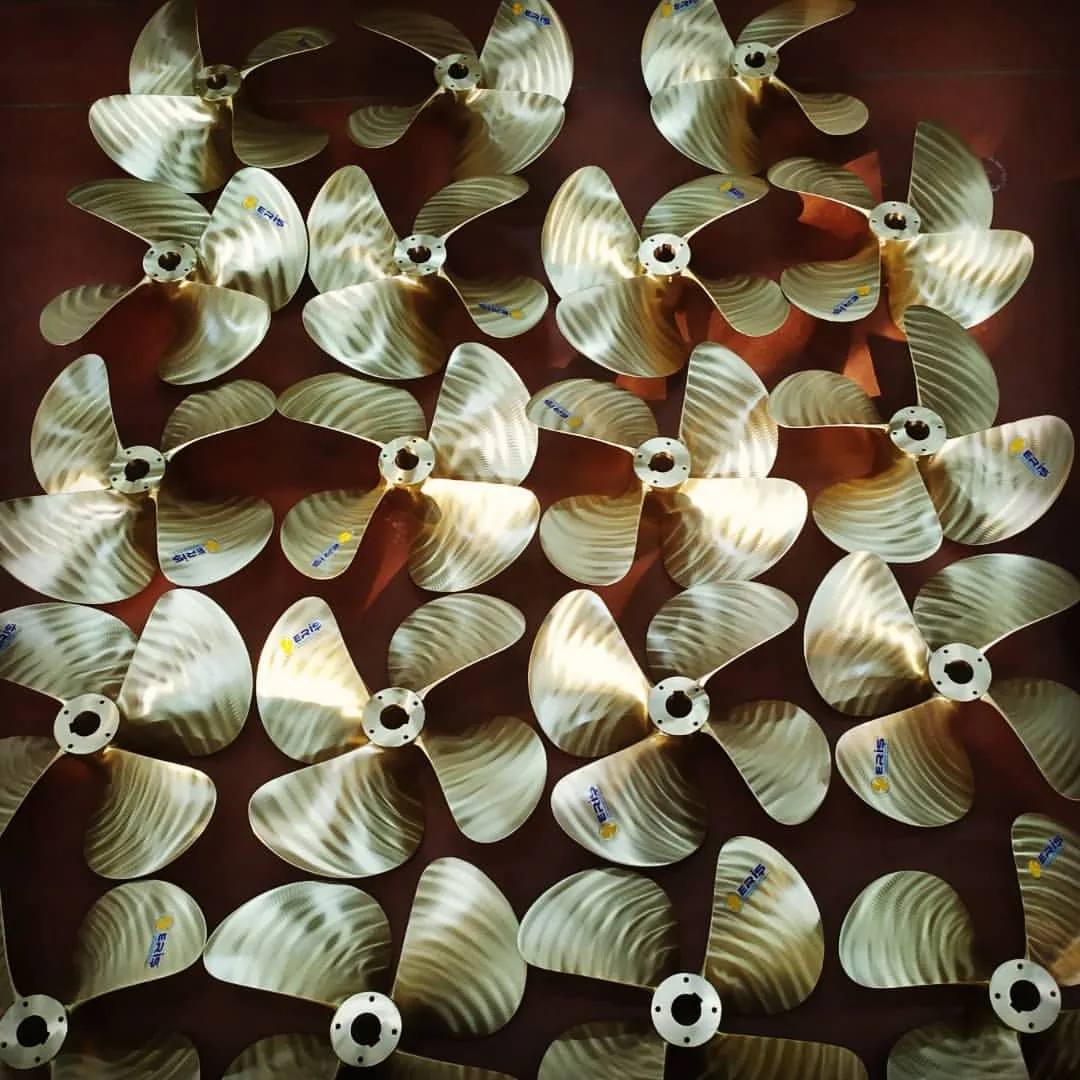
Two propellers can share diameter, pitch and blade count, yet one runs quietly while the other cavitates. The difference is often in the blade area, which decides how wide a surface the propeller uses to pass its thrust into the water.
What is the blade area ratio?
The total blade surface is expressed as a ratio of the disc area swept by the diameter, the disc area ratio or blade area ratio (BAR, DAR). At 50% the blades cover half the disc; near 100% they almost fill it.
Pros and cons of a large blade area
A larger area spreads the same thrust over more surface, reduces the pressure drop and lowers cavitation risk. At high rpm, a smaller diameter combined with a larger blade area reduces cavitation problems, which is why fast boats use large-area propellers.
The price:
- Efficiency falls as blade area grows, because of increased surface friction. For efficiency, keep the area as small as possible.
- The loss is much smaller on a 3-bladed propeller than on a 4-bladed one, thanks to its better section friction.
In practice the right area is usually set by the need to avoid cavitation. Where there is no cavitation risk, it is set by the need for good stopping power astern.
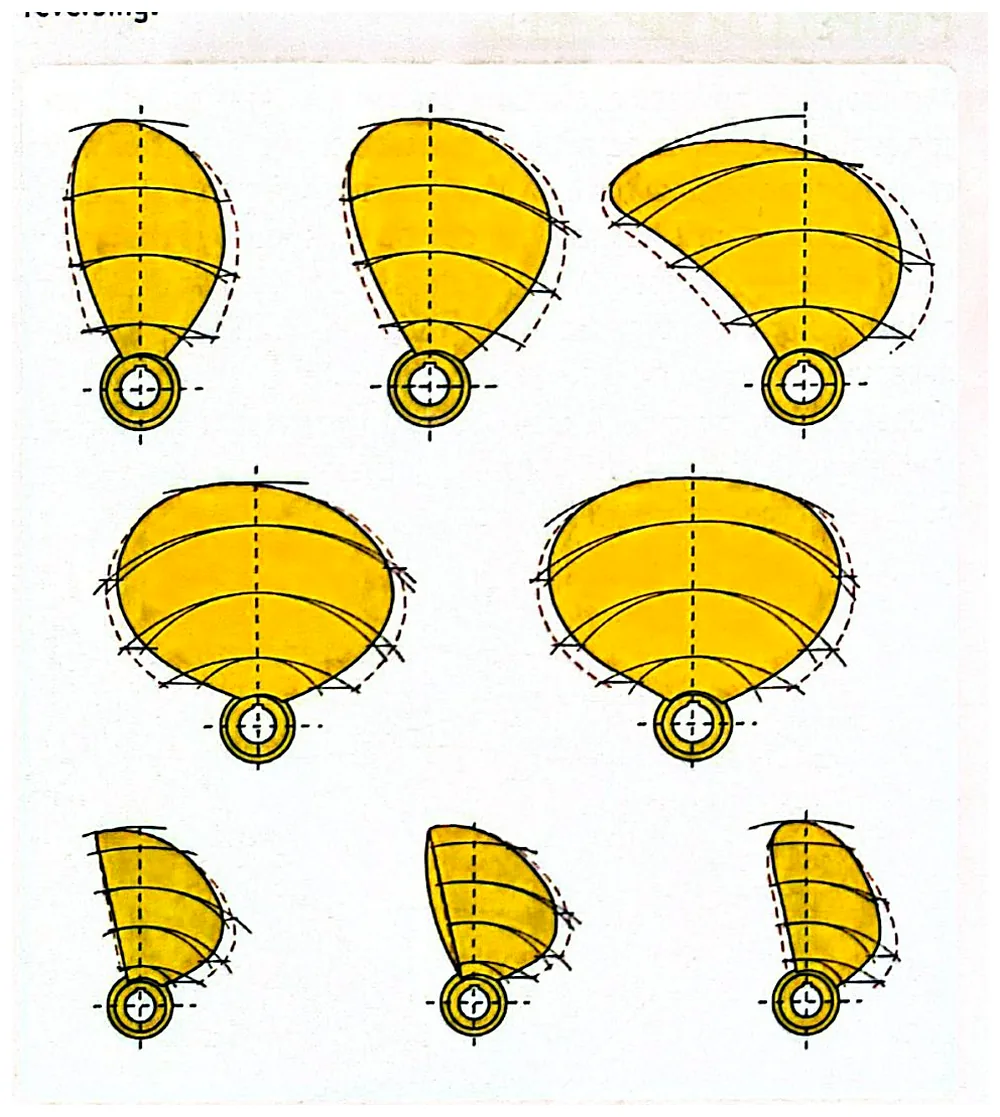
Blade contour: tip width matters
A wide blade tip is less sensitive to cavitation than a narrow one.
Blade section: chosen by speed
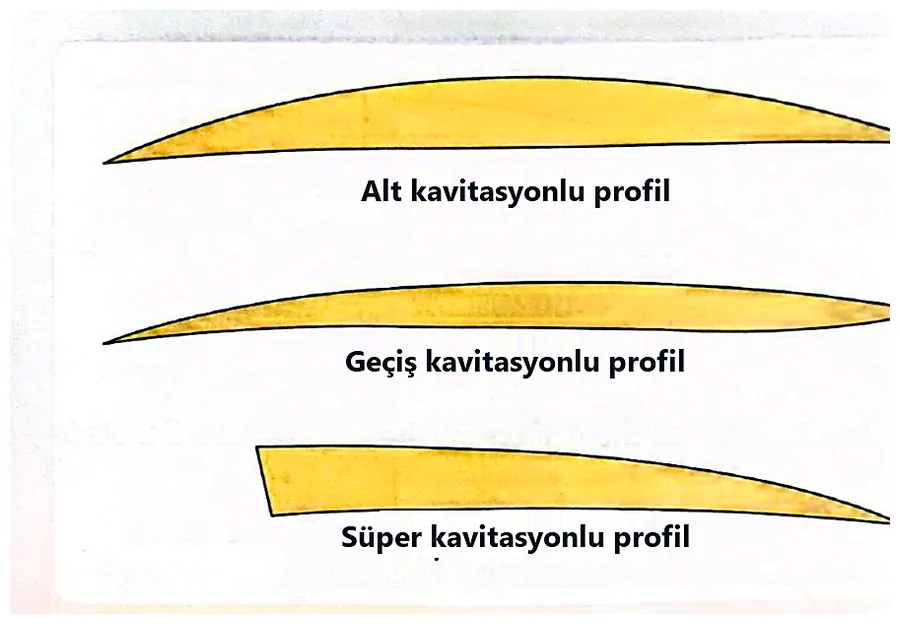
| Section | Shape | Typical boat speed |
|---|---|---|
| Subcavitating | Fairly flat face, oval back | Up to 35 knots |
| Transcavitating | Thin, flat, sharp-edged | About 35–45 knots |
| Supercavitating | Wedge, blunt trailing edge | Fast planing boats |
Subcavitating propellers are the most common. Supercavitating propellers deliberately form the cavity behind the blade, moving erosion off the blade, and still give acceptable thrust at low speed.
Cavitation zones by speed and blade area
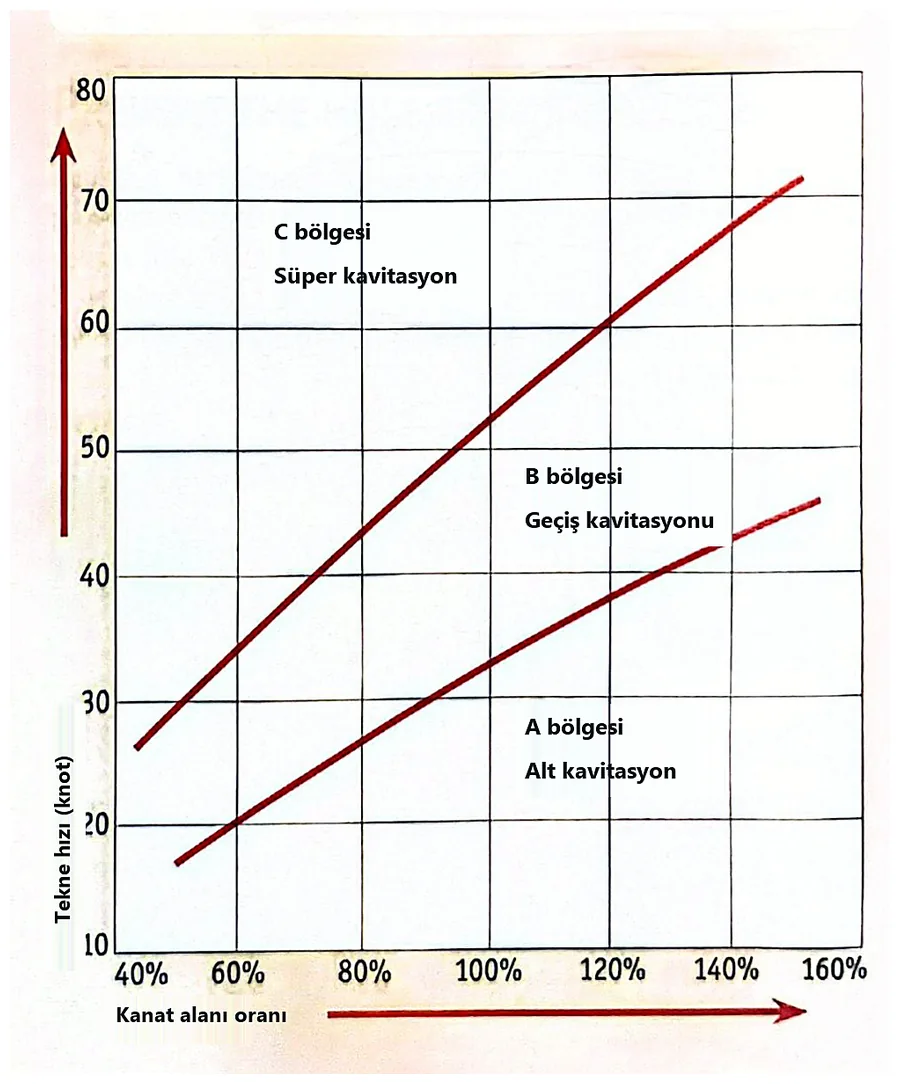
The lower boundary rises from about 17 knots at 50% area to 46 knots at 154%; the upper one from 26 knots at 44% to 72 knots at 151%. For a 30-knot boat with a 60% BAR the lower line sits at about 20 knots, so the propeller falls in zone B. To stay subcavitating the area ratio would need to rise to about 97%, trading some efficiency for lower noise and erosion risk.
Blade area should be large enough to prevent cavitation and small enough to keep efficiency.
Ask our engineers to review the blade area and section of your current propeller.